

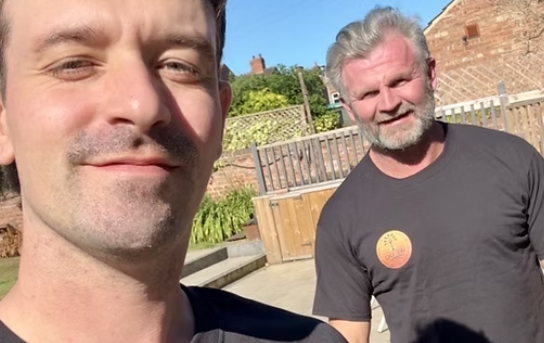
We Do was founded by Dan and Charlie with a simple aim: to help people when life becomes challenging.
At its core, the We Do project is built on a belief that feels both simple and quietly powerful: when life becomes overwhelming, support should be human, accessible, and free from judgement. Recovery, in this model, is not something imposed from the outside, but something shaped through connection, understanding, and shared experience.
The project was founded by Dan and Charlie, two men whose paths crossed in recovery. While their experiences of addiction and alcoholism looked very different on the surface, they discovered that the emotional reality beneath was strikingly similar.
Charlie lived openly in addiction and alcoholism for more than 33 years. Those years were marked by chaos, loss, and a constant state of survival, where life often felt unmanageable. Dan’s experience was quieter but no less consuming. His addiction and alcoholism were largely hidden behind closed doors, drinking around the clock while outwardly maintaining the appearance that everything was fine. Through recovery, both came to understand that addiction wears many masks, but its impact is universal: isolation, disconnection, and pain.
From those shared experiences, an idea began to form. Not a service built on hierarchy or clinical distance, but something honest and human. A space that recognised people as people first, not problems to be fixed. That idea became We Do.
The name itself is intentional. We Do reflects collective responsibility and shared effort. It speaks to the belief that no one should have to navigate addiction, mental health challenges, or major life stress alone.
The project exists to walk alongside people, offering support that is grounded in empathy and lived understanding.
Today, We Do supports individuals experiencing addiction, alcoholism, mental health challenges, stress, burnout, grief, and other behaviours that can impact wellbeing. Its approach is inclusive and flexible, designed to meet people where they are rather than where systems expect them to be.
A central strand of the project is peer-led support. Safe, non-judgemental spaces are created where people can speak openly about their experiences. These are not environments focused on instruction or diagnosis. Instead, they prioritise listening, shared understanding, and mutual respect. For many, simply being heard by someone who truly understands can be a turning point.
Alongside peer support, We Do offers coaching and wellbeing practices that focus on practical tools for everyday life. This might include building emotional awareness, developing healthier coping strategies, or restoring confidence that has been eroded over time. The emphasis is on dignity and agency, supporting people to move forward at their own pace rather than prescribing a single definition of recovery.
Community connection sits at the heart of everything We Do delivers. Recovery is not viewed as a linear or solitary journey, and setbacks are treated with compassion rather than judgement. By fostering a culture that normalises struggle and celebrates progress in all its forms, the project helps reduce shame and encourages honesty.
Crucially, We Do does not position itself as the answer to everything. It works alongside other services, complementing existing support and signposting when needed. This collaborative approach reflects a wider understanding that recovery is an ecosystem, strengthened when organisations work together rather than in silos.
What makes We Do stand out is not grand promises, but authenticity. It is a project shaped by people who have been there, who understand the realities of addiction and mental health from the inside, and who believe deeply that change is possible.
From two men meeting in recovery to a growing community built on compassion and connection, We Do continues to prove that when support is rooted in lived experience and genuine care, it can help people rebuild their lives with confidence and dignity.