
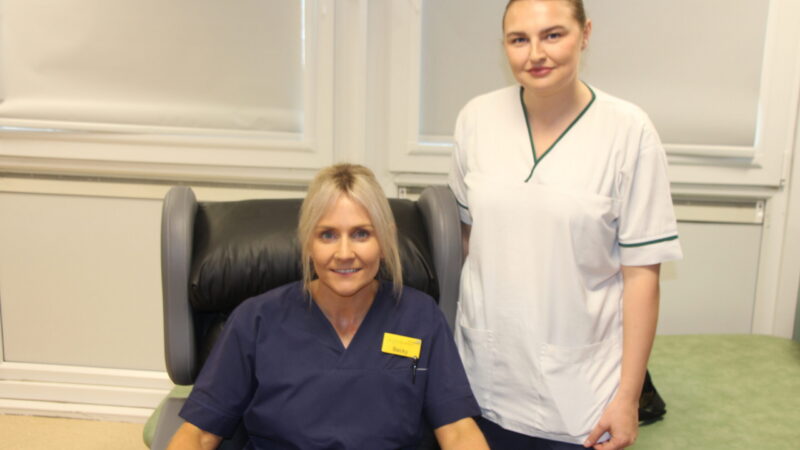
Specialist seating has helped the orthopaedic team at the University Hospital of North Tees raise the of hip-fracture patients getting out of bed on the first day after surgery from an of 67% to 85% during a pilot.
The Stockton hospital has now secured 23 adjustable chairs for patients recovering from broken hips and other orthopaedic injuries. Eighteen cost more than £40,000 through North Tees and Hartlepool Together, the trust charity, while a further five cost £15,000 for use on the orthopaedic base.
Why the right chair matters
For people recovering from a serious injury, time spent out of bed is part of rehabilitation. A standard ward chair can be uncomfortable or poorly suited to someone whose movement is restricted, making it harder to sit out for long enough to take part in .
The new chairs can be adjusted around individual patients. Rebecca Auton, care coordinator for the hospital’s acute therapy teams, said appropriate seating supports people to sit out for longer, engage with rehabilitation and work towards returning home. The trust says the team has already seen a large increase in chair time in the first weeks of use.
That focus fits national guidance. The National Institute for Health and Care Excellence recommends that people who have had hip-fracture surgery should receive a physiotherapy assessment and, unless there is a medical or surgical reason not to, be mobilised on the following day. The National Hip Fracture Database also records getting out of bed by the day after surgery as a key measure of care.
A project built by therapy staff
Senior occupational therapist Ella Matthews led the latest work with colleagues from orthopaedics and the wider acute therapy team. It builds on an earlier project developed by senior occupational therapist Lauren Bettinson, senior respiratory physiotherapist Amie Cronin and senior occupational therapist Megan Wilson.
The first project examined what happened when patients had access to suitable specialist seating. According to the trust, people spent longer in the chairs, while the team saw benefits for rehabilitation and the management of falls risk. Those findings helped staff make the case for the first 18 chairs and then for the additional five-chair pilot.
The rise from 67% to 85% in day-one mobilisation is a useful early measure, but it is not a complete assessment of recovery. The trust has not published the number of patients included, the length of the pilot or longer-term such as hospital stay and discharge destination. It would therefore be premature to every improvement to the chairs alone.
What happens next
The occupational therapy team will continue collecting patients’ views, monitoring how often the chairs are used and reviewing their effect on overall recovery. That follow-up should show whether the early increase in mobilisation is sustained as the chairs become part of routine care on wards 32 and 33.
For now, the project offers a practical example of clinicians noticing a barrier on the ward and testing a focused response. The equipment is not a replacement for physiotherapy or wider post-operative care, but it may give more patients a comfortable place to begin the work of getting moving again.