
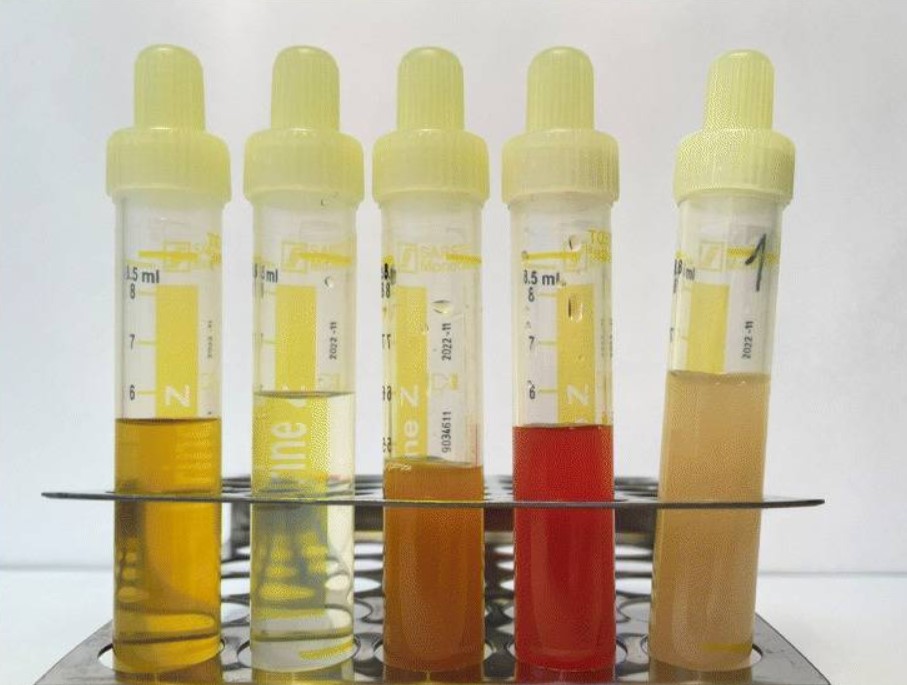
A Teesside emergency department has begun the first UK of a bedside urine test that could help doctors identify acute pancreatitis more quickly. The AUTOPANC study at the University Hospital of North Tees plans to recruit 600 patients who arrive with abdominal pain. The first 100 participants have already joined.
A five-minute test beside the patient
AUTOPANC stands for serum amylase versus urinary trypsinogen in the of acute pancreatitis. Patients attending urgent and emergency care with stomach pain may be offered the chance to take part. The team will compare the rapid urine test with the blood testing commonly used when doctors suspect pancreatitis.
The test looks for trypsinogen-2, a pancreatic enzyme that rises in urine during acute pancreatitis. It works at the bedside in a similar way to a pregnancy test and can return a result within five minutes. The hospital says it is non-invasive, easy to use and involves almost no processing cost. The test is not currently available for routine use in the UK.
Why speed matters
Acute pancreatitis is a sudden inflammation of the pancreas. It can cause severe upper abdominal pain and may require urgent hospital . Professor Vikramjit Mitra, consultant gastroenterologist and chief investigator, said timely diagnosis remains difficult. Most NHS hospitals use an amylase blood test when a patient first arrives, but results can take time and the test can miss cases.
A faster bedside check could help clinicians decide sooner which patients need treatment or further . The study is particularly interested in whether a negative urine result can rule out acute pancreatitis with enough confidence to support earlier decisions. That is a narrower and more useful question than simply asking whether the strip produces a quick reading.
A trial, not a new standard of care
The work is still a study, and no results from the North Tees participants have been published. Earlier gives reason for careful testing rather than easy conclusions. A Cochrane review found that urinary trypsinogen-2, serum amylase and serum lipase had broadly similar diagnostic accuracy at standard thresholds; each could miss some people with the condition. The North Tees study therefore should not be read as proof that the urine strip can replace existing assessment.
The project is funded through a research from Guts UK and is described by the trust as an NIHR study. Laura O’Rourke, the hospital group’s trauma, injuries and emergency medicine lead research nurse, said the emergency department is the first UK centre to run the trial. George Simpson, an emergency department consultant and the department’s research lead, credited the wider team with identifying patients, carrying out the test and supporting the research process.
What happens next
now need to recruit a further 500 patients to the planned total. People are approached when they attend the University Hospital of North Tees with abdominal pain; the trust has not advertised public self-enrolment. The study will assess how reliably the five-minute strip can help rule out acute pancreatitis and whether it can support earlier treatment decisions.
If the findings are strong enough, Professor Mitra said the test could eventually be considered by other UK centres. That decision lies beyond this trial. For now, the practical achievement is local: North Tees patients and emergency staff are contributing evidence about a simple tool that may help shorten one part of a difficult diagnosis.