
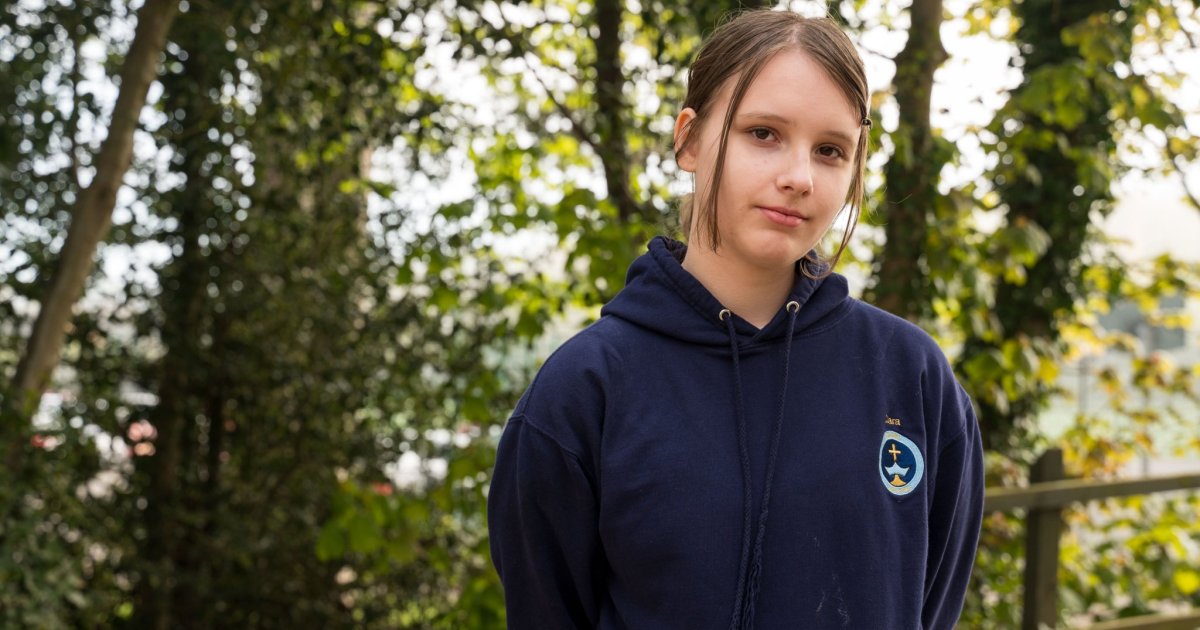
For two pupils at Carmel College, GCSE results day measured far more than revision and examination technique. It marked academic progress made while each was also dealing with a serious medical condition.
Clara G underwent for Hodgkin’s lymphoma, missing most of Year 9 and time in Year 10. Clara C had spinal fusion surgery for scoliosis in 2025 and spent six weeks away from school. Both returned to their and collected strong results this August.
Achievement in interrupted school years
Clara G earned a grade 9 in English literature, the highest grade in the current GCSE system. She is planning to continue with art. The result is not because illness should become a test of character, but because cancer treatment removed time and energy that classmates could devote to ordinary school life.
Hodgkin’s lymphoma affects the lymphatic system and its treatment can disrupt every part of a young person’s routine. The account from Bishop Hogarth Catholic Education Trust does not need embellishment: returning after that absence and reaching the top English literature grade is a substantial academic achievement.
Clara C achieved a grade 8 in English language after surgery to correct scoliosis. A spinal fusion is a major procedure, and recovery meant six weeks away from the classroom. She now intends to film at A Level, carrying her interest in language and storytelling into the next stage.
The pupils are referred to here only by the first name and initial used in the school trust’s public report. Their health experiences are relevant because they explain the disruption they overcame, but the results remain their educational achievement rather than a public claim on every detail of their medical lives.
Support, recovery and the next chapter
When illness interrupts school, catching up is not simply a matter of receiving missed worksheets. A pupil may need phased attendance, flexibility around appointments and teachers who can identify the most important gaps without making the return feel impossible.
Classmates and family also shape that experience, while medical teams carry the work of treatment and recovery. Results day cannot divide the achievement neatly between those people, but it gives the pupil a moment in which their own effort is visible.
It is important, too, not to set exceptional stories as a standard for every young person facing illness. Recovery is not a competition, and grades do not measure how bravely somebody has coped. Clara G and Clara C deserve celebration for the results they earned, without implying that a pupil whose health prevents the same has fallen short.
The most hopeful part of both stories is the direction of travel. Art and film are not consolation choices; they are subjects the pupils can now approach with strong of what they can do. After school years shaped by treatment and surgery, each has an academic future that belongs to more than a .
On a results day full of numbers, the two Claras gave Carmel College a reason to pause over what those numbers can represent: knowledge gained, time reclaimed and the freedom to start thinking about what comes next.